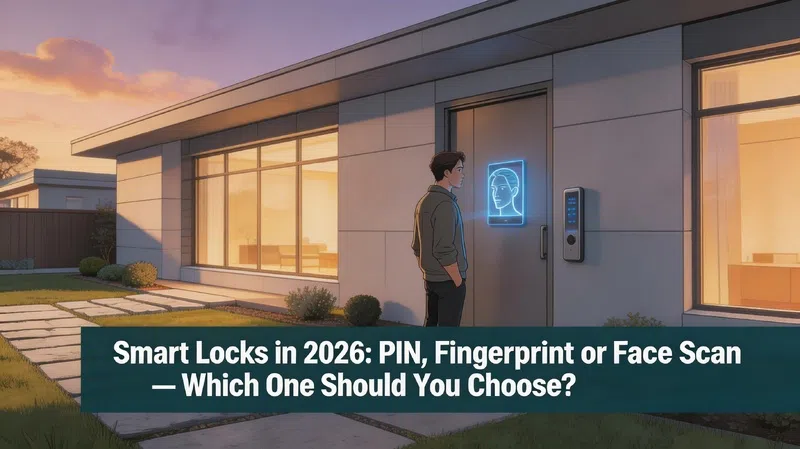

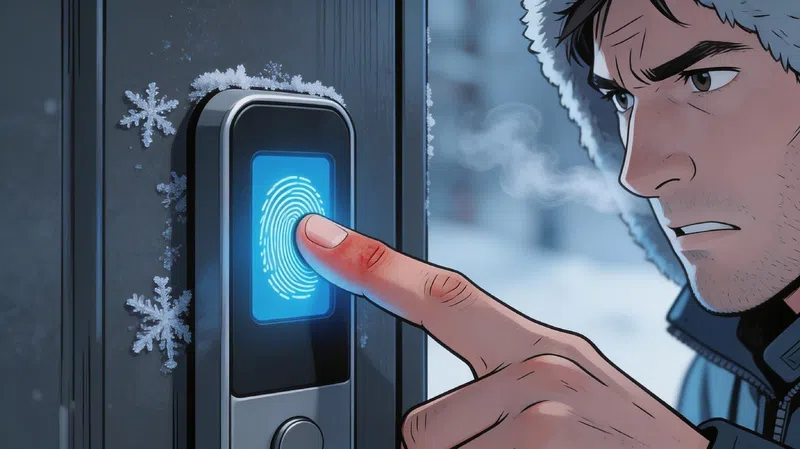
My neighbor got a fancy biometric lock installed last winter. By February, it stopped recognizing his thumb because the cold had dried out his skin badly enough to confuse the sensor. He spent two weeks entering a PIN code he’d half-forgotten, standing in the cold, mildly furious. The lock itself worked perfectly. His fingerprints just didn’t cooperate.
That’s the kind of thing no spec sheet mentions.
What the Smart Lock Market Looks Like Right Now
The global smart lock market is on track to hit $3 billion in 2026. That number sounds impressive, and honestly it reflects something real: these devices have gotten genuinely better over the last few years. Not perfect. But better.
What’s driving the growth isn’t novelty anymore. It’s the shift toward more reliable authentication methods, better cross-brand compatibility, and a slowly maturing understanding of what “smart” actually means in a front-door context. People aren’t just buying these locks to feel futuristic. They’re buying them because handing out physical keys has become genuinely inconvenient, especially for people managing rentals, small offices, or households with elderly family members who keep losing things.
That said, the options have also multiplied to a slightly overwhelming degree.
PIN Codes: Still the Most Reliable Backup You’ll Ever Have
Nobody gets excited about PIN codes. They’re not the headline feature on any marketing page, but in my experience, they’re the reason smart locks don’t turn into expensive regrets.
Every serious smart lock should offer a PIN option alongside its biometric features. Not as the primary method, but as the fallback that works when your hands are wet, when it’s below freezing, when the camera fogs up, or when a family member simply can’t get the fingerprint scanner to cooperate.
The main weakness of PIN access is human behavior. People choose predictable codes, share them too freely, or forget to update them after a houseguest leaves. None of that is the lock’s fault, but it’s worth being honest about.
Fingerprint Scanners: Convenient Until They’re Not
Where Fingerprint Recognition Works Well
For most adults in mild climates using a lock on an interior door or a garage entry, fingerprint scanners work well enough that you’ll forget the friction ever existed. They’re fast, they don’t require a phone nearby, and enrollment takes about two minutes.
Where It Gets Complicated
The cold weather problem is real and more common than manufacturers like to admit. Low temperatures reduce skin conductivity and cause the kind of minor dryness and cracking that throws off capacitive sensors entirely. If you live somewhere with actual winters, this matters.
There’s also a user inclusivity issue that rarely gets discussed. Children under a certain age often don’t have developed enough ridge patterns for consistent reads. Elderly users with naturally fading prints face the same problem. Combine that with the simple reality of dirty or wet hands, and you start to understand why fingerprint-only locks generate a disproportionate share of negative reviews.
It’s not a bad technology. It just has a narrower effective range than the marketing implies.
Facial Recognition: The Technology That’s Actually Advancing Fast
Three-dimensional facial recognition has pulled ahead of two-dimensional systems by a significant margin, mostly because of anti-spoofing. A 2D camera can be fooled by a photograph. A 3D system using structured light or Time-of-Flight sensors builds a depth map of your face that a printed image simply can’t replicate.
By 2026, the better systems are hitting recognition speeds under 0.3 seconds with liveness detection accuracy above 99.97%. Those numbers come from controlled testing environments, so real-world performance varies, but the direction of travel is clear.
The category to watch is vein recognition, which uses near-infrared light to map the internal vein patterns in your finger or palm. Because the feature being scanned is inside your body, it’s unaffected by skin surface conditions and inherently resistant to spoofing. It’s currently expensive and mostly deployed in high-security commercial settings, but costs are dropping and the technology will reach consumer price points within a couple of years.
Which Protocol Should Your Smart Lock Use?
This is where a lot of buyers make an expensive mistake. The authentication method is the front-facing feature, but the connectivity protocol determines how well the lock integrates with everything else in your home and how long it stays useful as the ecosystem evolves.
| Protocol | Best For | Strengths | Weaknesses |
|---|---|---|---|
| Matter-over-Thread | Future-proof setup | Cross-brand compatibility, low power, built-in encryption | Higher hardware cost, certification complexity |
| Zigbee | Existing smart home hubs | Reliable mesh, great battery life | Needs a bridge, ecosystem fragmentation |
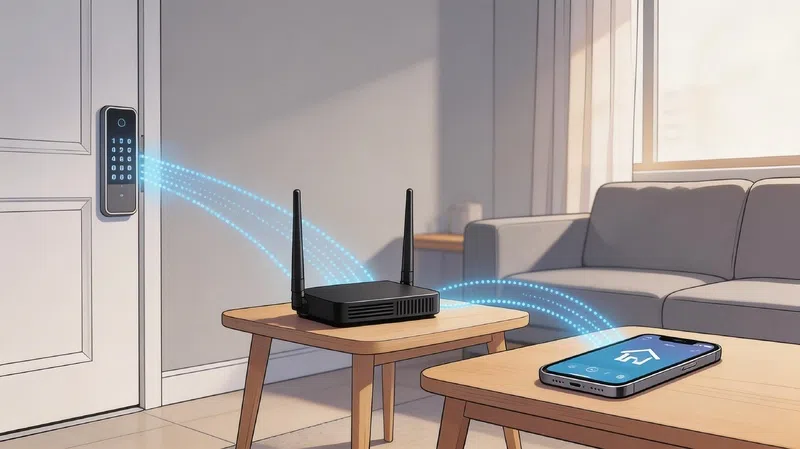
| Wi-Fi | Simplicity, no hub | Works directly with your router | Heavy battery drain, usually tied to one vendor’s cloud |
The practical advice here is straightforward: if you’re buying new in 2026, prioritize Matter-certified devices. The Matter standard was designed specifically to prevent the situation where a firmware update from one company breaks compatibility with another. It’s not perfect yet, but it’s the right direction.
Worth knowing: 2026 also marks the emergence of Aliro, a cross-platform digital key standard that handles NFC and proximity-based access across different ecosystems. If you’re shopping for a lock that manages multiple users or rental units, keep an eye on Aliro compatibility.
The Regulations Most Buyers Don’t Know About
Something shifted in early 2026 that I think deserves more attention than it’s getting in buying guides.
Washington State passed ESSB 5937 in March 2026, which directly affects smart lock installations in rental properties. Landlords are now legally required to offer tenants alternative access methods, such as fobs or physical keys, that don’t depend on biometric data or a smartphone app. They’re also limited to collecting only the minimum authentication data needed for entry, and they must provide written privacy policies covering data retention.
That law is Washington-specific right now, but the pattern it sets is likely to spread.
On the European side, the Cyber Resilience Act (EU 2024/2847) starts enforcing cybersecurity standards for connected devices in August 2026. If you’re shopping for a smart lock sold in Europe, or from a manufacturer that sells into Europe, this matters because it means baseline encryption and vulnerability disclosure requirements are now mandatory, not optional.
The honest takeaway: a higher price tag does not automatically mean better security. Some expensive locks spend their hardware budget on display panels and finishes rather than on encryption or liveness detection. Looking for Matter certification and checking whether biometric data is processed locally on the device are two quick ways to filter out the ones that look good on paper.
You can check Matter certification status directly through the CSA’s product registry before purchasing. iFixit’s teardown library is useful for checking whether a lock’s internal security claims hold up in practice.
The Installation Reality Nobody Talks About
Around 40% of users run into problems during initial setup. A quarter of those say the manufacturer instructions were unclear or incomplete. Mortise lock integrations, which are common in older European-style doors, remain a particular pain point because the lock body sits inside the door itself rather than on the surface.
Battery life is the other ongoing friction. Cold temperatures slow the chemical reactions inside batteries, which means a lock that lasts eight months in California might drain in four months in Minnesota. If the lock is on an exterior door in a cold climate, factor that in before choosing a model with a non-replaceable battery configuration.
Should You Actually Buy One?
Probably yes, with a few conditions. Research compatibility before purchase, not after. Prioritize local biometric data processing so your face scan doesn’t live on a vendor’s server somewhere. Choose Matter-over-Thread if you’re planning any broader smart home integration. And make sure, whatever the main authentication method is, there’s a PIN fallback that works without a phone.
The technology is genuinely good in 2026. But a smart lock that doesn’t work in January, or stops being supported when the company pivots, is just an expensive way to lock yourself out. CNET’s security coverage and The Wirecutter’s lock recommendations are worth reading alongside whatever the manufacturer says about their own product.
The lock my neighbor has still works, by the way. He just learned to use the PIN in winter.
FAQs About Smart Locks in 2026
Real questions, honest answers
Does a higher price mean better security on a smart lock? ▾
Not always. Some expensive models focus on visual design or extras like color displays rather than on robust encryption or liveness detection. A better filter is whether the lock is Matter-certified and whether biometric data is processed locally on the device rather than sent to a cloud server.
Do smart locks work in the dark? ▾
Most 2026 models use infrared cameras that maintain accuracy in low-light conditions without needing visible light. That said, strong backlighting from behind the user, such as standing in front of a bright outdoor lamp, can still interfere with facial recognition performance on lower-end models.
Can a smart lock be hacked through Wi-Fi? ▾
The risk exists, but it’s meaningfully reduced by end-to-end encryption and regular firmware updates. Matter-certified locks use AES-128 encryption as a baseline. Keeping the lock’s firmware updated is probably the single most important thing you can do to reduce exposure to new vulnerabilities.
What is the best way to manage guest access? ▾
Temporary PIN codes are generally the recommended approach. They allow you to set specific time windows for access, track entry events, and revoke access without affecting your primary credentials. Avoid adding guests as permanent biometric users unless you genuinely intend to give them ongoing access.
Why does my smart lock drain batteries faster in winter? ▾
Cold temperatures slow the chemical reactions inside batteries, which directly reduces their output capacity. A lock rated for 8 months of battery life in normal conditions can drain significantly faster in sustained cold. Using lithium batteries instead of standard alkaline ones helps, as lithium chemistry holds up better at low temperatures.
What is the Aliro standard and do I need to care about it? ▾
Aliro is a cross-platform digital key standard that allows NFC and proximity-based access to work across different ecosystems without being locked to one vendor’s app. It’s just emerging in 2026. If you manage multiple properties or plan to use digital keys across different platforms, it’s worth factoring Aliro compatibility into your buying decision now.