
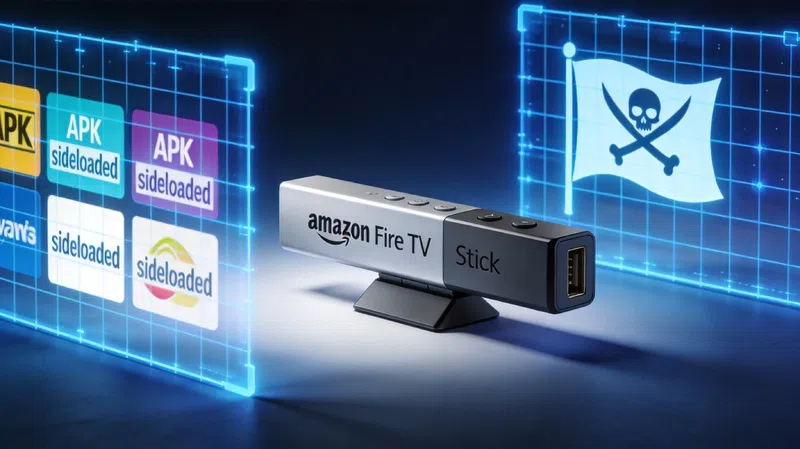
The Crackdown Didn’t Come Out of Nowhere
There’s been a slow buildup to this. Amazon didn’t just wake up one morning and decide to go after third-party streaming apps out of nowhere. This has been brewing for years — pressure from studios, from content licensing bodies, from the broader shift in how seriously the industry treats digital piracy now.
Fire TV devices have always occupied a strange middle ground. They’re legitimate hardware, sold in major retail stores, used by tens of millions of people. But the ability to sideload apps made them attractive to users looking for, let’s say, less official viewing options.
In my experience watching this space, the casual user didn’t always understand the legal distinction between sideloading a free app and subscribing to an actual service. That blurry line probably helped piracy thrive on the platform longer than it should have.
What’s changed recently isn’t just policy language — it’s enforcement. Amazon has reportedly begun removing apps, tightening sideloading capabilities in certain contexts, and working more closely with rights holders.
It’s not just about piracy apps specifically
The broader story here involves Amazon protecting its own ecosystem too. If users can watch anything for free through shady apps, why would they pay for Prime Video?
What “Cracking Down” Actually Looks Like in Practice
This is where it gets a bit murky. The crackdown isn’t a single dramatic event. It tends to happen quietly — an app disappears, an update breaks a workaround, a policy update gets buried in legal text most people skip entirely.
Amazon has reportedly been using automated detection tools alongside manual review to flag apps that stream unauthorized content. Some developers have received account terminations. Others have seen their apps pulled without much explanation.
It’s worth noting that sideloading itself hasn’t been completely disabled. Amazon hasn’t gone full Apple in that regard. But the conditions around it have gotten stricter, and there’s more friction now than there used to be.
For regular users who relied on certain free streaming apps — particularly those that aggregated unlicensed content — some of that convenience has quietly disappeared. Not overnight, but gradually.
When enforcement feels inconsistent
The frustrating part, honestly, is that enforcement hasn’t been perfectly even. Some apps lasted much longer than others with similar functionality. Whether that reflects legal complexity or just slow response times, it’s hard to say.
Legal Streaming Still Works Fine — And That’s Kind of the Point
Amazon’s own services are unaffected, obviously. Prime Video runs fine. Apps like Netflix, Disney+, Hulu, HBO Max (now Max), Peacock, Paramount+, Apple TV+, and others operate normally on Fire TV devices. These are the platforms that have licensing agreements in place.
Tubi and Pluto TV — both ad-supported, both completely free — are also available and working. These services offer a surprising amount of content without any subscription cost, which makes the appeal of piracy apps somewhat harder to justify these days.
The legal ecosystem for free-ish streaming has genuinely gotten better. A few years ago, the options outside a paid subscription were pretty thin. Now there are real, legitimate choices that don’t put users at legal risk.
That’s probably part of Amazon’s argument here — there are good options, you don’t need the shady ones. Whether users agree is a different conversation.
Not everyone has considered the alternatives
It often feels like the conversation about piracy skips past the part where some users genuinely don’t know about ad-supported legal options. Tubi alone has thousands of titles. That’s not nothing.
The Legal and Licensing Pressure Behind the Decision
Studios and content distributors have been pushing platforms harder on piracy-adjacent behavior. Several high-profile lawsuits in recent years targeted apps and services that facilitated unauthorized streaming, and platforms like Amazon have been put in the uncomfortable position of either acting or becoming complicit.
There’s also the issue of international licensing. A lot of piracy app content involves streams licensed in one territory being accessed from another — which is a rights violation even if the content technically “exists” on a legitimate platform somewhere. This tends to create real friction in licensing negotiations.
Amazon’s deals with major studios require a certain level of platform integrity. Allowing piracy apps to flourish openly would jeopardize those relationships. That’s not just speculation — it’s how these business agreements tend to work.
Rights holders have gotten smarter about enforcement
Content owners now monitor platforms more actively than they did even five years ago. Some use automated fingerprinting tools. Others have legal teams dedicated to exactly this kind of enforcement. The old assumption that streaming piracy was too diffuse to police isn’t really accurate anymore.
Where This Leaves Fire TV Users Going Forward
Honestly, if you were using Fire TV mostly for its official app support, nothing has changed for you. The device still works the same way for Netflix, Prime Video, Max, and the rest.
If you were using it for unofficial streaming setups, that experience has gotten noticeably harder — and likely will continue to do so. Amazon has shown it’s willing to enforce these policies, and there’s no obvious reason they’d reverse course.
The more interesting question is what this means for the broader Android TV and streaming stick ecosystem. Fire TV isn’t alone here; Google TV and Roku have faced similar pressures. But Amazon’s approach has been somewhat more proactive recently, or at least more visible.
There’s no tidy takeaway to offer here. The streaming landscape is just… shifting again, as it always does. Some of that shift is about rights, some about money, some about Amazon deciding what kind of platform it wants to be.
For most users, the practical answer is probably to explore what’s legally available before assuming the best options are gone. They often aren’t.
Useful Resources:
- Amazon Fire TV official support: https://www.amazon.com/firetv
- Tubi free streaming: https://tubitv.com
- Pluto TV free streaming: https://pluto.tv
- Peacock free tier: https://www.peacocktv.com